Nutrition Value in a Chicken Breast: Complete Guide to Calories, Protein, Vitamins, and Health Benefits
Chicken breast remains one of the most popular protein sources across the world. Whether someone is trying to lose weight, gain muscle, improve fitness, or simply eat healthier meals, chicken breast usually becomes part of the conversation. The reason is simple. It delivers a large amount of high quality protein while keeping calories and fat relatively low.
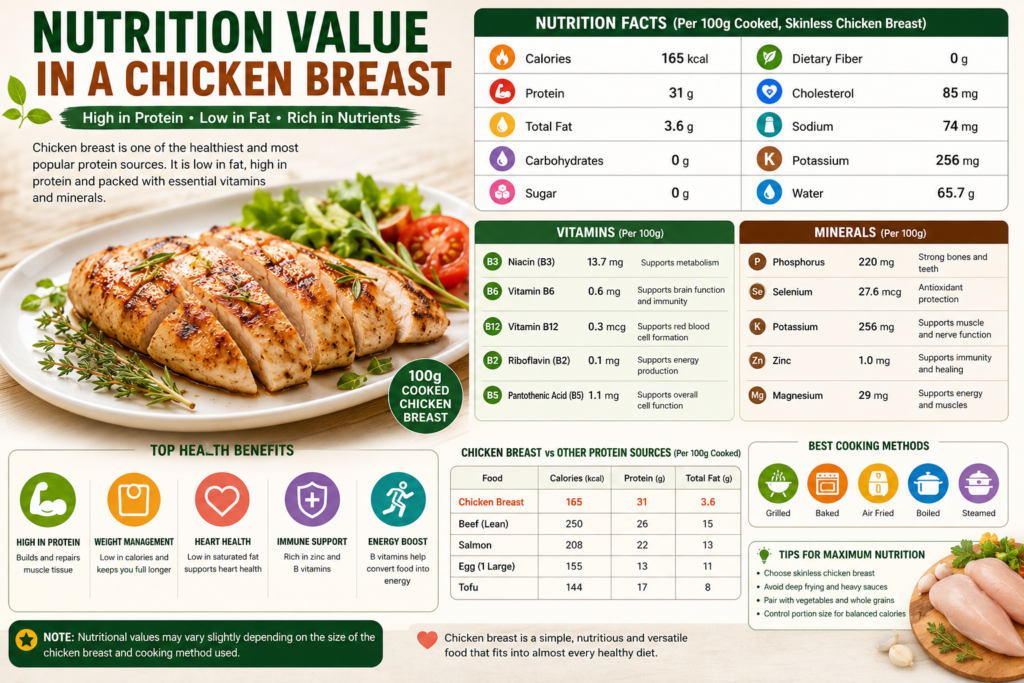
Many people include chicken breast in their daily meals but never take the time to understand the complete nutrition profile. Knowing the nutrition value in a chicken breast can help you make better food choices and create a balanced diet that supports your health goals.
Unlike many processed protein sources, chicken breast provides natural nutrition without excessive carbohydrates or unhealthy fats. It is versatile, affordable, and easy to prepare in countless ways. From grilled meals and salads to sandwiches and meal prep containers, chicken breast fits almost any eating plan.
Quick Nutrition Facts of Chicken Breast
The following table shows the average nutrition value for 100 grams of cooked, skinless chicken breast.
| Nutrient | Amount Per 100g |
|---|---|
| Calories | 165 |
| Protein | 31g |
| Fat | 3.6g |
| Carbohydrates | 0g |
| Sugar | 0g |
| Fiber | 0g |
| Cholesterol | 85mg |
| Sodium | 74mg |
| Potassium | 256mg |
The numbers clearly show why chicken breast is often considered one of the best lean protein foods available.
Why Chicken Breast Is Considered a Nutritional Powerhouse
Many foods provide protein, but chicken breast offers a unique combination of nutrients that make it stand out.
Key Advantages
- High protein content
- Low calorie density
- Low saturated fat
- No carbohydrates
- Rich in essential vitamins
- Good source of minerals
- Supports muscle maintenance
- Helps with appetite control
This combination makes chicken breast suitable for people with different health and fitness goals.
Protein in Chicken Breast
Protein is the most important nutrient found in chicken breast. A 100 gram serving provides around 31 grams of protein, making it one of the richest protein sources available.
Protein Content by Serving Size
| Serving Size | Protein |
| 100g | 31g |
| 150g | 46.5g |
| 200g | 62g |
| 250g | 77.5g |
Protein performs several important functions in the body:
- Builds and repairs muscle tissue
- Supports immune function
- Helps produce hormones
- Maintains healthy skin and hair
- Supports enzyme production
- Promotes recovery after exercise
People who participate in strength training or sports often rely on chicken breast because it helps meet daily protein requirements efficiently.
Calories in Chicken Breast
Understanding calorie intake is important for weight management. Chicken breast provides a substantial amount of nutrition without excessive calories.
Calories by Portion Size
| Portion Size | Calories |
| 100g | 165 |
| 150g | 248 |
| 200g | 330 |
| 250g | 413 |
Compared with many processed foods, chicken breast provides more nutritional value per calorie. This makes it an excellent choice for individuals following calorie controlled diets.
Fat Content in Chicken Breast
Many people assume all meat contains large amounts of fat, but chicken breast is relatively lean.
| Nutrient | Amount |
| Total Fat | 3.6g |
| Saturated Fat | 1g |
| Unsaturated Fat | 2.6g |
Most of the fat found in chicken breast is naturally occurring and can be part of a healthy eating plan.
Vitamins Found in Chicken Breast
Chicken breast supplies several important vitamins that support overall health.
| Vitamin | Function |
| Vitamin B3 | Energy production |
| Vitamin B6 | Brain health |
| Vitamin B12 | Red blood cell formation |
| Riboflavin | Cellular growth |
| Niacin | Metabolism support |
These vitamins help the body convert food into usable energy while supporting normal bodily functions.
Essential Minerals in Chicken Breast
In addition to vitamins, chicken breast contains several valuable minerals.
| Mineral | Benefit |
| Selenium | Antioxidant protection |
| Phosphorus | Bone strength |
| Potassium | Muscle function |
| Zinc | Immune support |
| Magnesium | Energy production |
Selenium deserves special attention because chicken breast is one of the better dietary sources of this important antioxidant mineral.
Chicken Breast for Weight Loss
Many weight loss plans include chicken breast as a core food. This happens because it provides high satiety while remaining relatively low in calories.
Why It Supports Weight Loss
- High protein helps reduce hunger
- Low calorie density supports calorie control
- Helps preserve muscle during weight loss
- Keeps you feeling full for longer periods
People often find it easier to stick to healthy eating plans when meals include adequate protein from sources like chicken breast.
Chicken Breast for Muscle Growth
Muscle development requires sufficient protein intake. Chicken breast delivers the amino acids necessary for muscle repair and growth.
Benefits for Fitness Enthusiasts
- Supports recovery after workouts
- Provides complete protein
- Helps maintain lean muscle mass
- Supports strength development
This is one reason chicken breast remains a staple food among athletes and gym members.
Chicken Breast vs Other Protein Sources
The table below compares chicken breast with several popular protein foods.
| Food | Calories | Protein |
| Chicken Breast | 165 | 31g |
| Beef | 250 | 26g |
| Salmon | 208 | 22g |
| Eggs | 155 | 13g |
| Tofu | 144 | 17g |
Chicken breast offers one of the best protein to calorie ratios among commonly consumed foods.
The nutrition value in a chicken breast makes it one of the healthiest protein sources available today. It provides high quality protein, essential vitamins, valuable minerals, and relatively low calories, making it suitable for weight loss, muscle growth, and overall wellness.
Whether your goal is building muscle, maintaining a healthy weight, or improving daily nutrition, chicken breast can play an important role in a balanced diet. When prepared using healthy cooking methods and paired with nutritious side dishes, it becomes a simple and effective way to support long term health.